a private territory
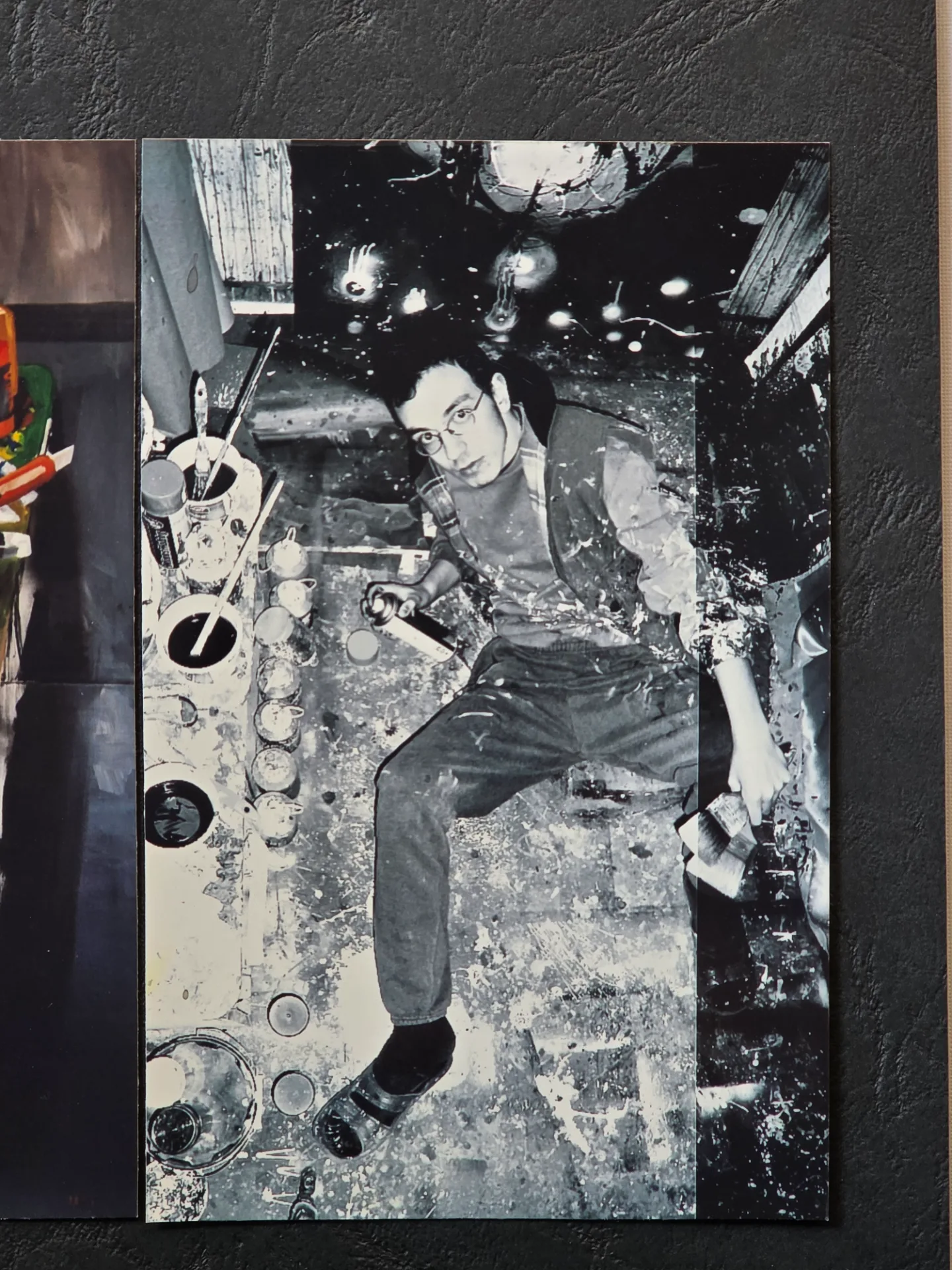
Long before art became my profession, it was a private territory—a place where imagination could acquire weight, colour and anatomy, where the creatures that inhabited my mind could escape the invisible realm of dreams and stand before me, embodied in paint, as if the canvas were not simply a surface but a threshold between the world that existed and the worlds that might still be created.
I began painting at around thirteen, at an age when the imagination is still wonderfully undisciplined, before experience teaches it to fear impossibility and before convention begins to draw its borders around what is considered serious, beautiful or correct. A year later, in 2005, when I was fourteen, I began my formal education at the Jordan Misja Artistic Lyceum in Tirana, entering a period of almost obsessive production during which painting became not merely a subject that I studied, but the principal language through which I interpreted reality, tested my instincts and gradually constructed an identity of my own.
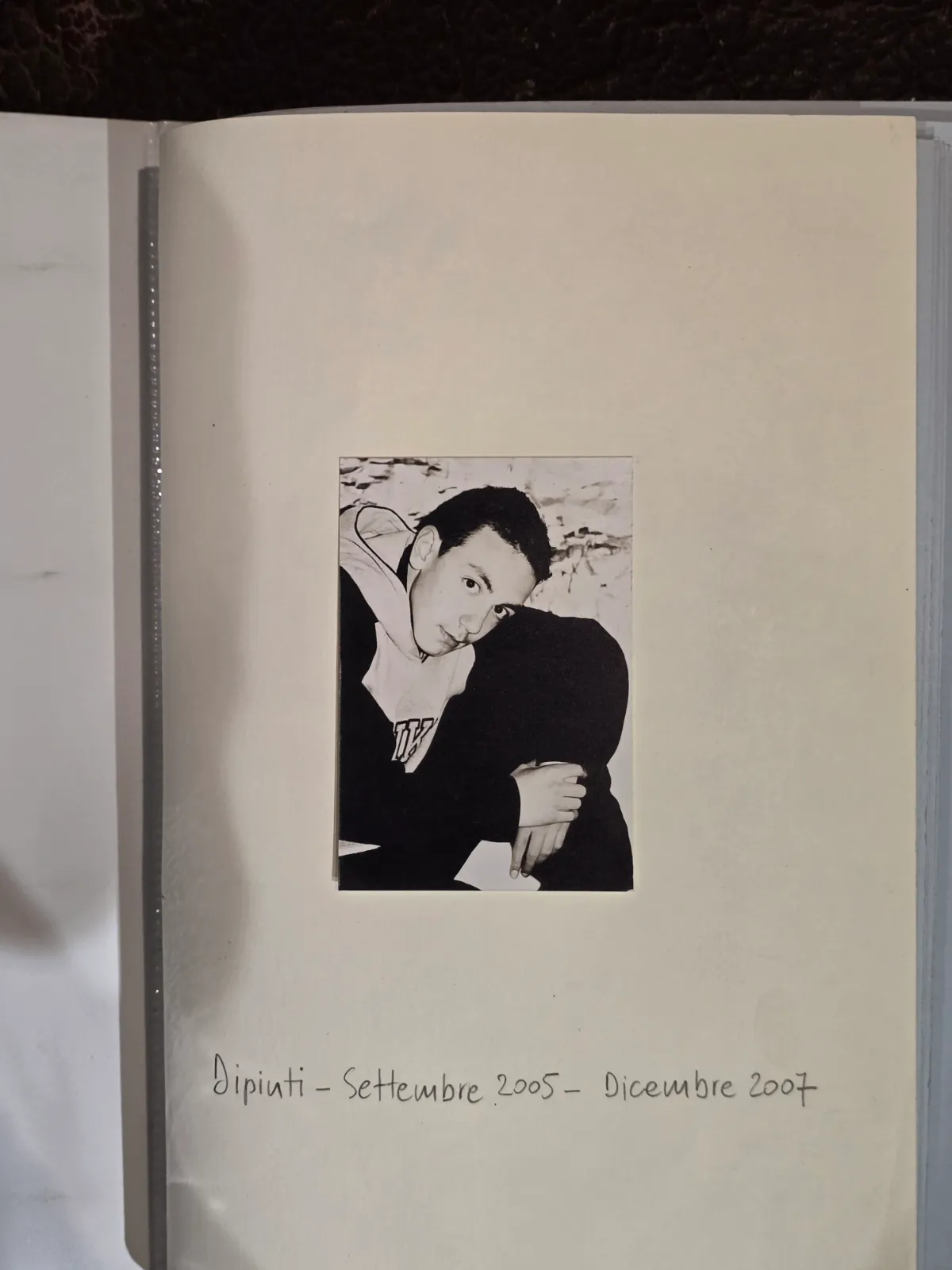
Those three years were defined by an intensity that, when I look back at it today, seems almost unreal: I produced more than one hundred works a year, moving from one canvas to the next with the urgency of someone attempting to document an entire universe before it disappeared. Quantity, however, was never only about productivity; it was a form of accelerated learning, because every painting contained a new technical problem, every unfinished figure exposed another limitation, and every successful experiment opened a door towards ten more possibilities. My understanding of composition, anatomy, colour and atmosphere was developing rapidly, yet something more important was also taking shape beneath those visible skills: a personal mythology, populated by heroes and monsters, strange landscapes and theatrical confrontations, in which the visual references I absorbed from cinema, animation and video games were translated into another medium and transformed by my own imagination.
krist dimo
Making thought visible
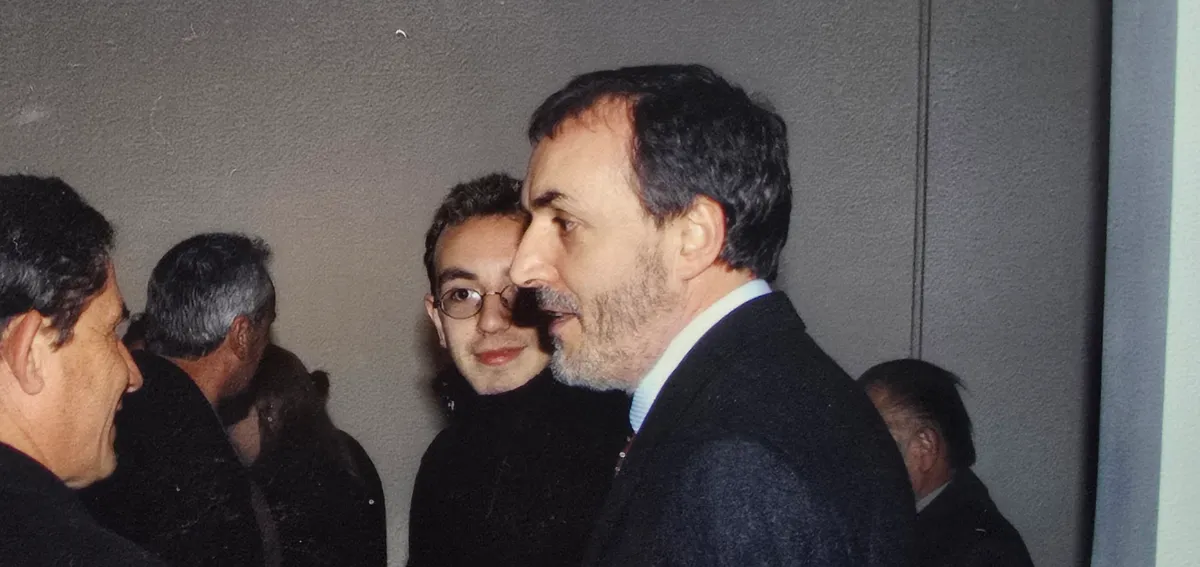
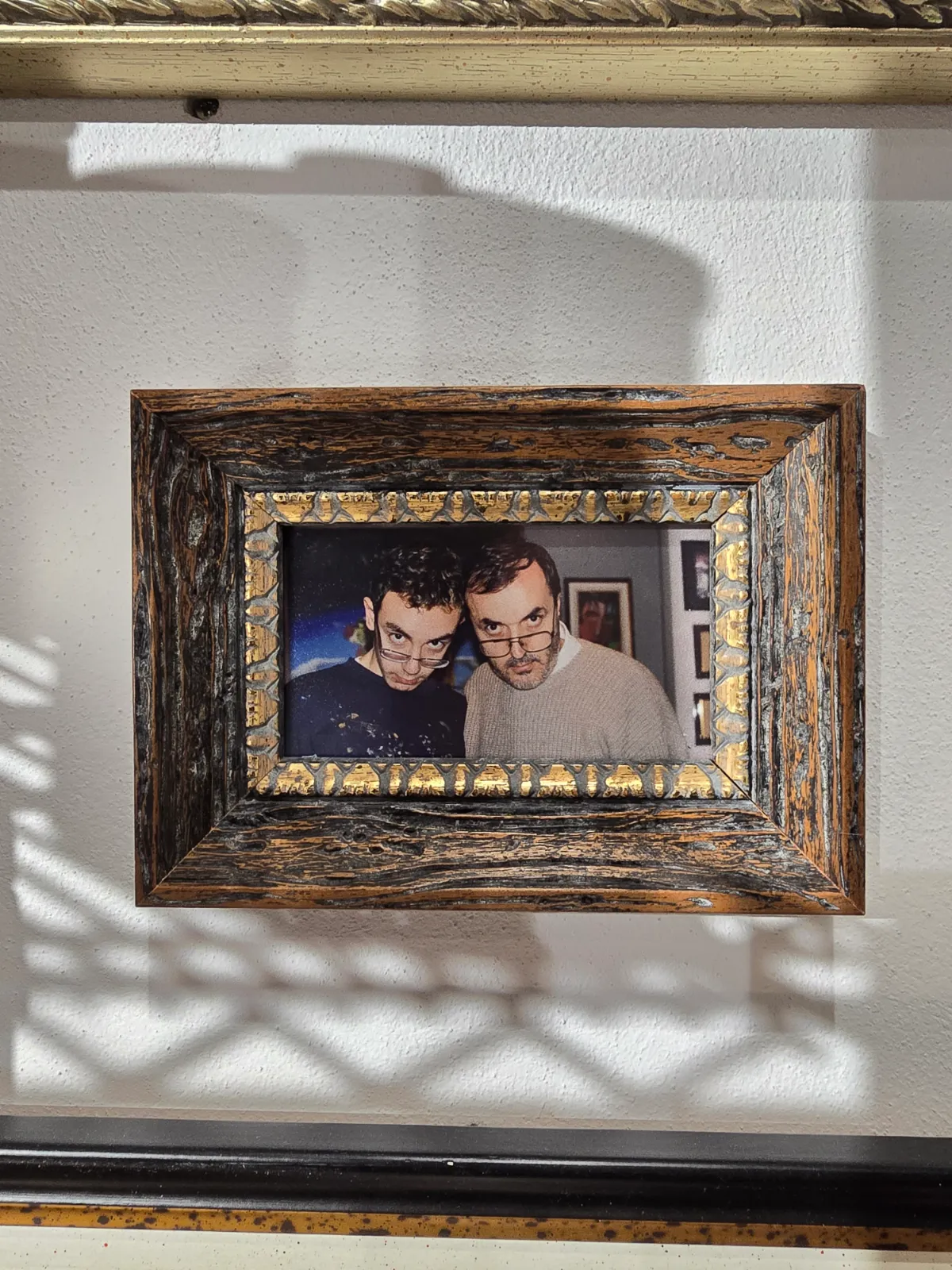
My father, Krist Dimo, was one of the strongest pillars of this early artistic formation, not only because he supported my decision to pursue art, but because he constantly pushed me away from the safety of the conventional, encouraging me to think without unnecessary limits and to treat expression as something more profound than technical correctness. Through him, I began to understand that a painting should not merely demonstrate the artist’s ability to reproduce the visible world; it should make thought visible, giving form to emotions, intuitions and ideas that cannot always be articulated through language.

The canvas became an arena in which thought could acquire flesh — where fear might become a creature, ambition a monumental figure, conflict a landscape and desire an entire imaginary civilisation.
Krist Dimo — project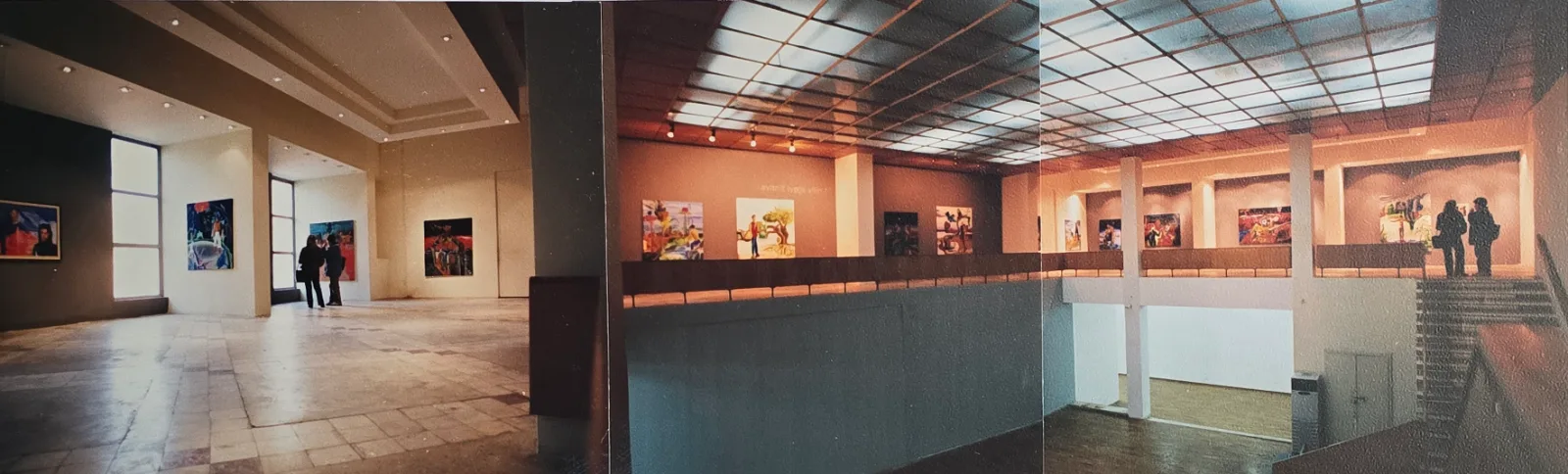
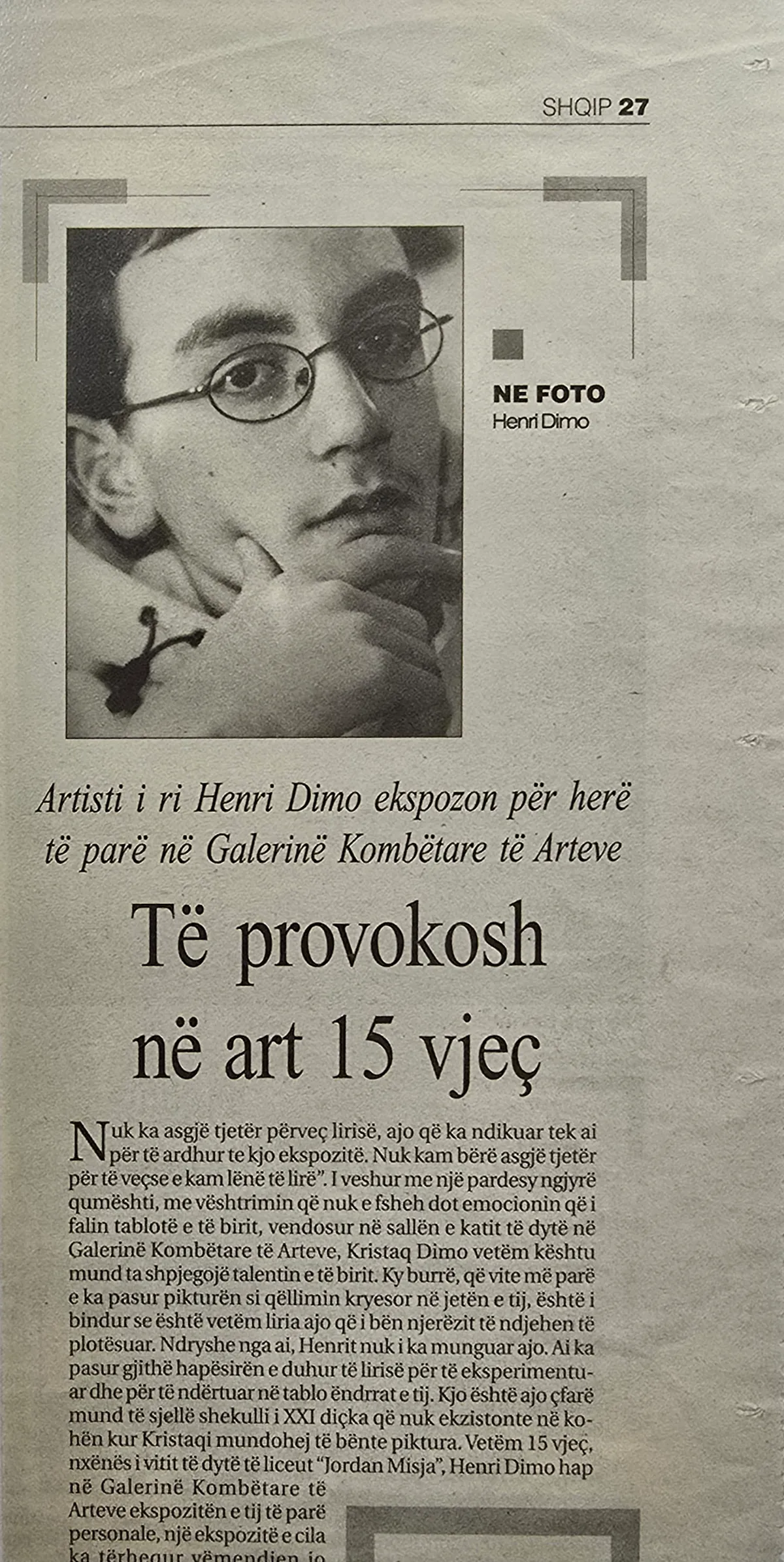
national gallery, at sixteen
By the age of sixteen, the volume of my work and the unusual density of the worlds contained within it had begun to attract attention in Tirana’s artistic community, leading to a solo exhibition at the National Gallery of Arts—an exhibition that, to this day, holds the gallery’s record for its youngest solo artist. It was an extraordinary moment, although at that age I could not fully understand its significance; I was still too immersed in the act of making, still chasing the next image and the next world, to see the exhibition as a destination. What others perceived as an early milestone felt to me more like the opening of another gate, a confirmation that the visions I had been constructing in solitude could leave the studio, enter a public space and begin a silent conversation with people I had never met.

The works from this period existed somewhere between magical realism, surrealism and speculative mythology, although I was not necessarily thinking in those categories while creating them. They emerged instinctively from a collision of influences: the visual drama of cinema, the architecture of fantasy worlds, the symbolic clarity of heroic archetypes, the grotesque beauty of monsters and the immersive logic of games in which every environment implies a story beyond the visible frame. I was never interested in reproducing these references literally; I wanted to dismantle them, absorb their emotional energy and rebuild them inside a new visual language, giving them a twist that belonged to me. A film scene could become the seed of an allegorical painting, a game character could dissolve into a mythological figure, and a childhood dream could reappear as a landscape whose logic was emotional rather than geographical.
worldbuilding
Worldbuilding, before I knew the word
a larger reality
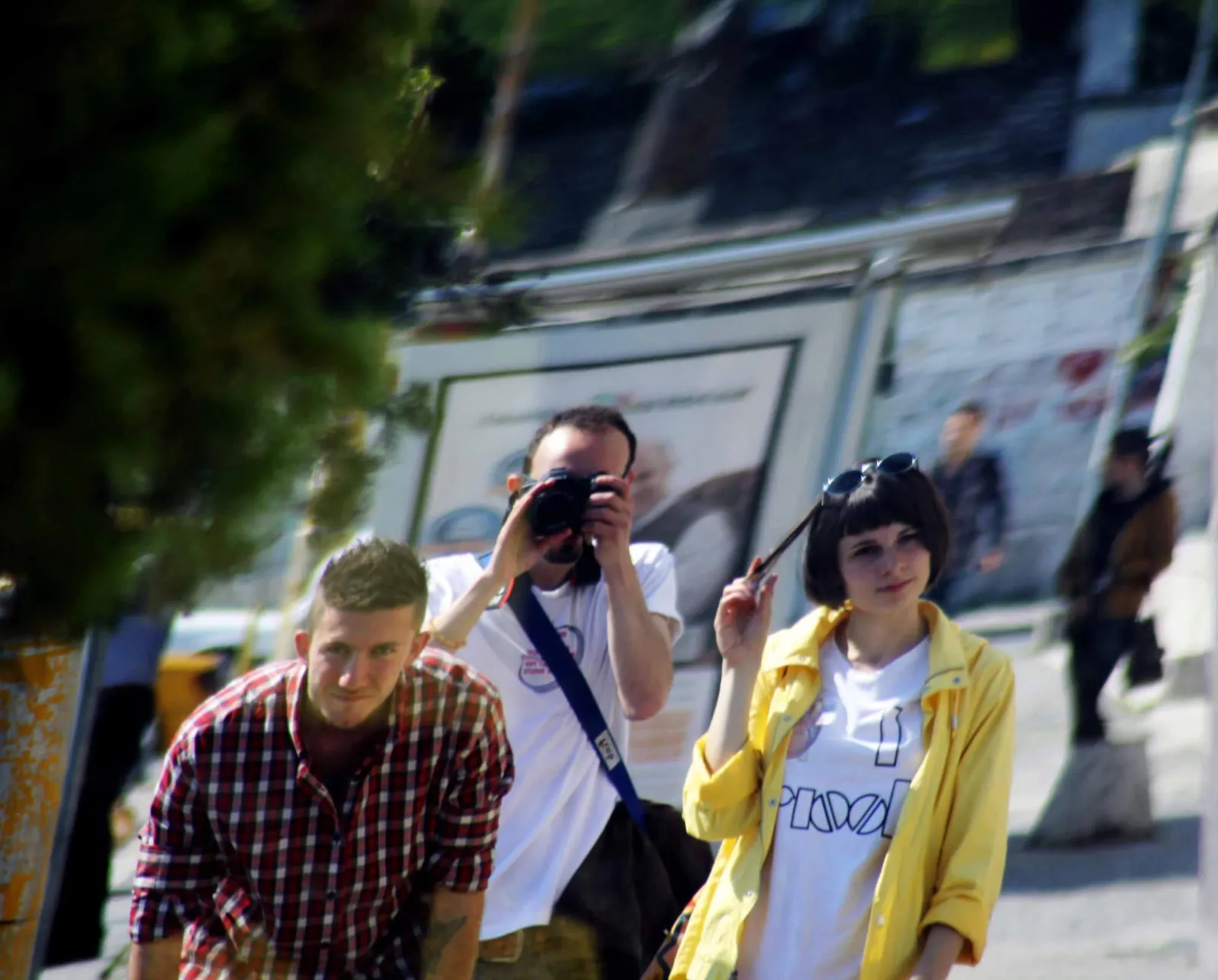
This early fascination with imagined universes became the foundation of something that would remain central throughout my career: worldbuilding. Even before I knew the term, I was already trying to create images that suggested a larger reality beyond their borders—images that felt as though they had a past, a mythology and an unwritten future. A hero was never simply a body occupying the centre of a composition; he belonged to a history. A monster was never only an antagonist; it was the physical manifestation of a fear, a system or a buried instinct. The setting was not decorative scenery but an active narrative force, capable of communicating mood, hierarchy, danger and desire before a single word had been spoken.
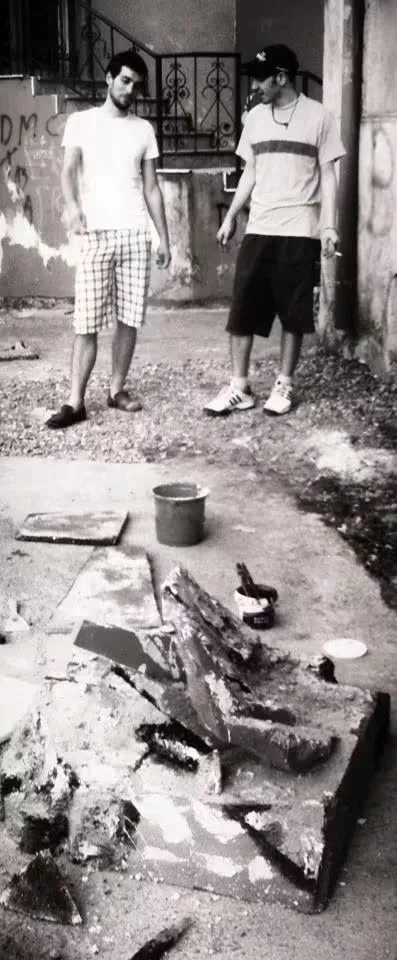
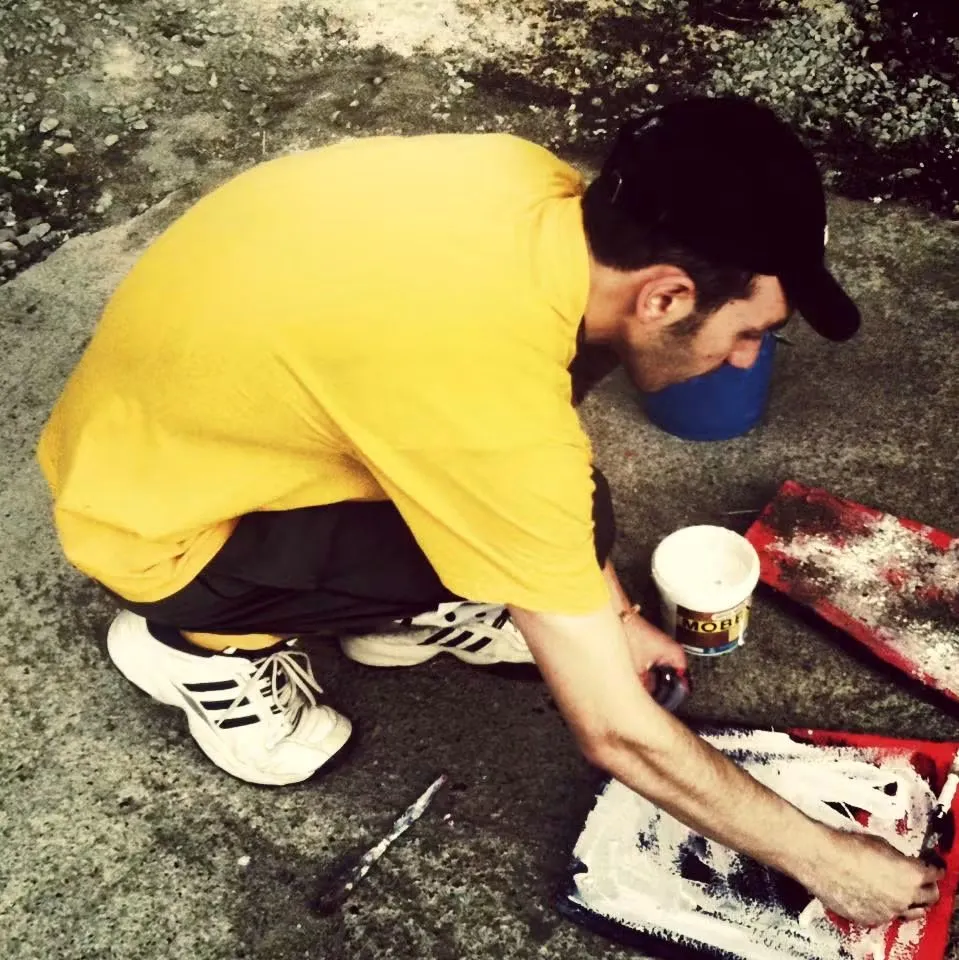
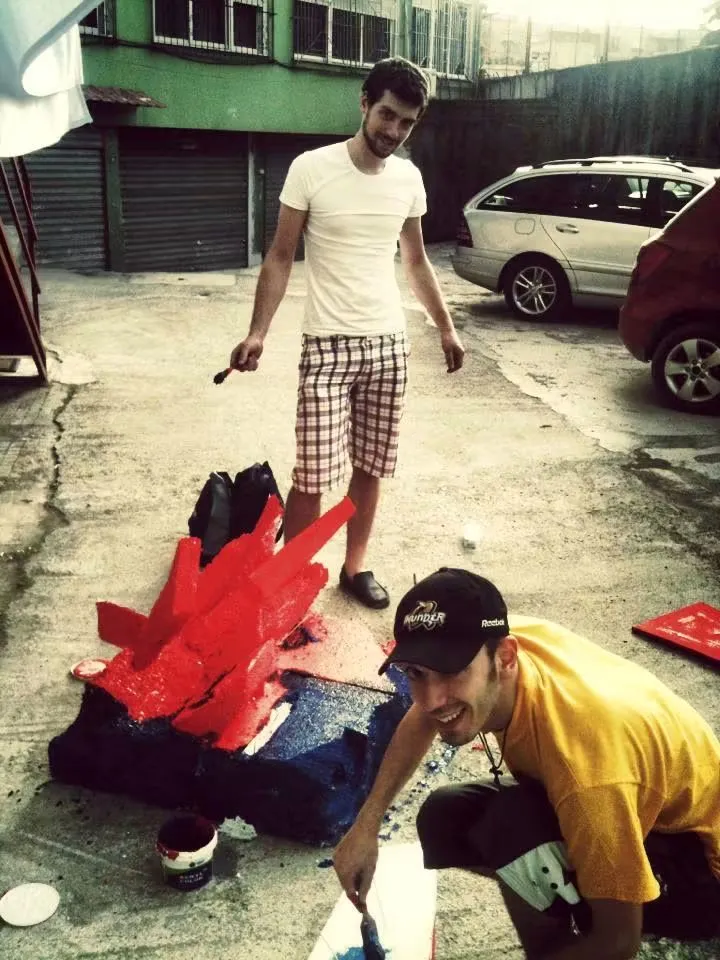


When the time came to continue my academic education, I made what initially appeared to be a contradictory decision: instead of moving deeper into the same artistic tradition in which I had grown, I chose to walk towards its apparent opposite. In 2012, I began a Bachelor’s degree in Art and Design, entering a field in which imagination was no longer allowed to exist entirely for itself but had to encounter purpose, audience, communication and function.
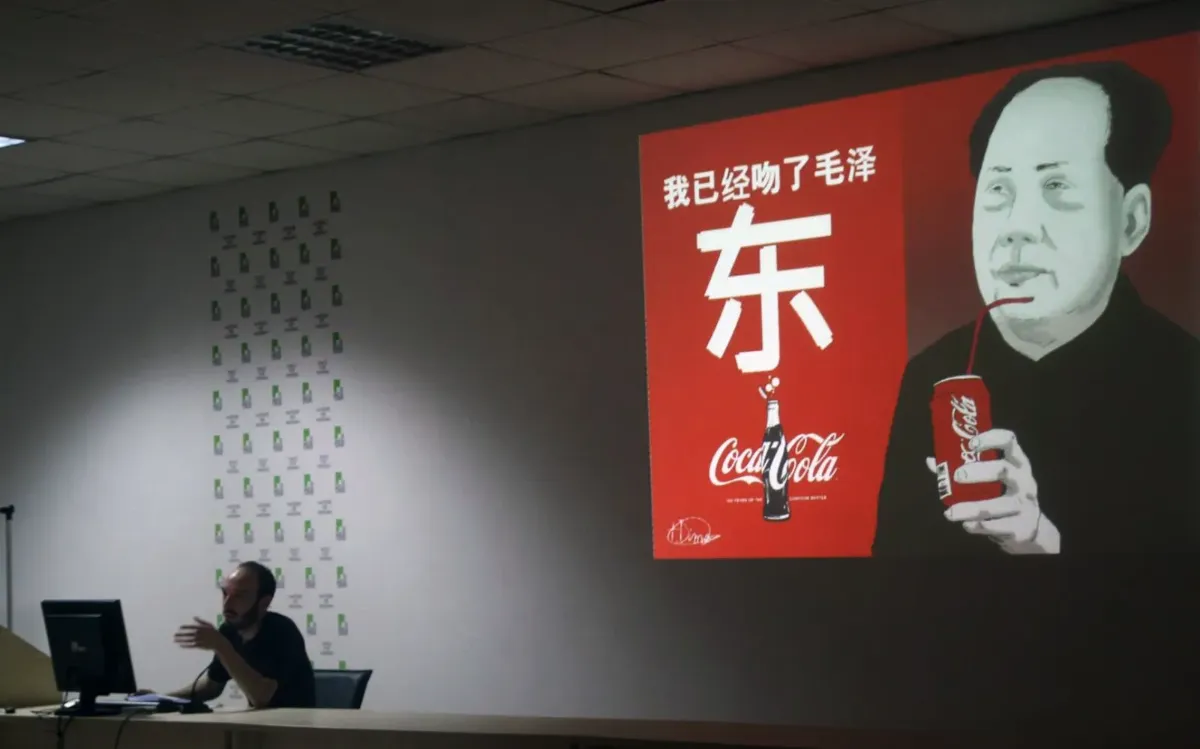
This transition did not erase the painter in me; it forced that painter to learn a new discipline.
what design asked
During this period, I practised digital painting extensively, discovering a medium that allowed the instincts of traditional image-making to enter a faster, more flexible and increasingly commercial environment. The screen became another kind of canvas, layers replaced drying time, and revisions could occur without destroying the history beneath them; yet the fundamental challenge remained unchanged—to create an image capable of transmitting an idea with clarity and emotional force. What changed was the architecture of my thinking, because design introduced questions that painting had never required me to answer so directly: Who is the image speaking to? What must it communicate? How quickly should it be understood? Which element should command attention first, and which should remain almost invisible while quietly holding the entire composition together?
I encountered principles such as form follows function and less is more, learning that reduction was not necessarily the enemy of imagination but could be one of its most demanding forms. To remove an element while preserving meaning requires precision; to build hierarchy from scale, contrast, rhythm and negative space requires a different kind of sensitivity; and to translate a complex idea into a symbol, a typographic system or a coherent visual identity requires the designer to think simultaneously as an artist, an editor and an architect of attention.
Design taught me that every visual decision creates behaviour. Typography can establish authority or intimacy before the words are read; colour can signal danger, nostalgia, luxury or rebellion; empty space can create silence; repetition can become rhythm; and a composition can guide the eye through an image as deliberately as a director guides an audience through a scene. I learned about grids, balance, hierarchy, visual systems, semiotics and the relationship between aesthetics and usability, but beneath all these principles stood a larger lesson: creativity becomes more powerful when it understands its own purpose.
If painting had taught me how to expand an idea into a universe, design taught me how to compress that universe into a message.
the circle closes
Back to the easel, with a designer’s eye
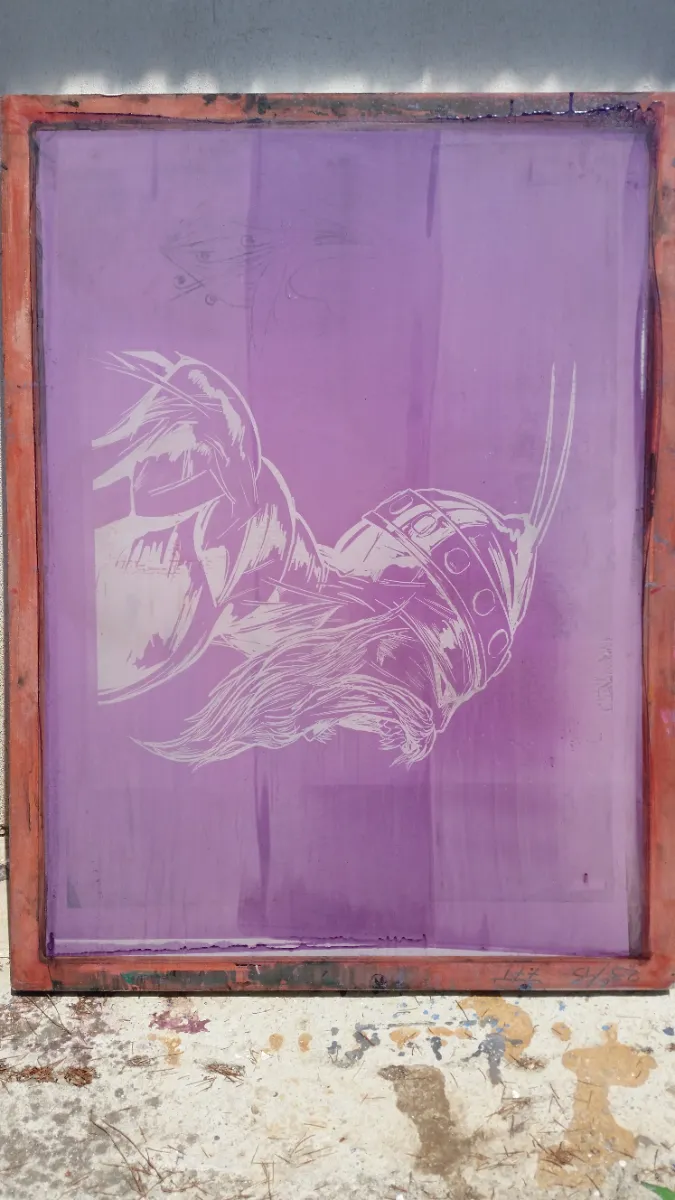

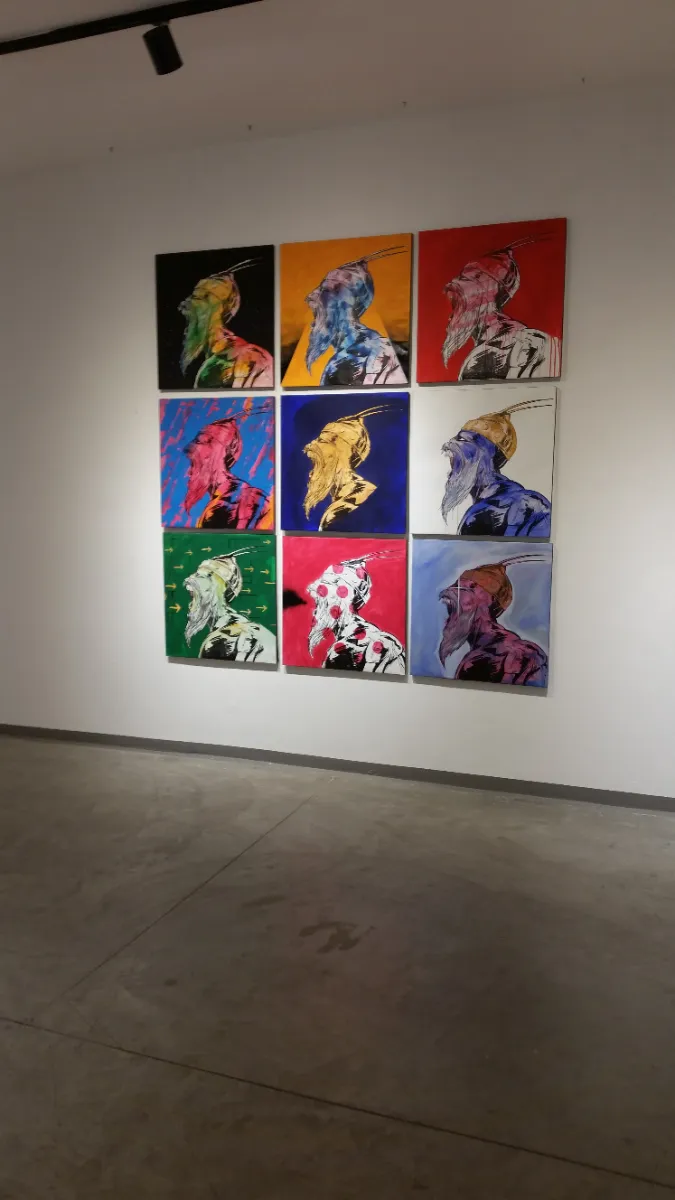
Later, during my Master’s studies, I returned to art school and to easel painting, although I was no longer the same painter who had first entered the studio as a teenager. I brought back with me the logic of design—the discipline of structure, the economy of form, the awareness of visual hierarchy and the ability to recognise when an image had said enough. This time, my paintings became cleaner and more deliberate; their compositions were no longer guided solely by expressive instinct but by a more mature understanding of how every element participates in the construction of meaning.
The circle had closed, but it had not returned to its starting point. My artistic instinct had entered design, been challenged by function and clarity, and then returned to painting carrying a new intellectual framework. What had once appeared to be a contradiction revealed itself as a productive dialogue: painting gave design imagination, atmosphere and emotional depth, while design gave painting precision, restraint and structural intelligence.
Across these different stages of education, I came to understand that disciplines do not need to exist as isolated rooms. The most interesting work often appears in the corridors between them, where illustration can borrow the logic of cinema, painting can absorb the discipline of graphic design, branding can construct fictional worlds, and commercial communication can carry the symbolic density of art. Each medium has its own grammar, but imagination can move between them like a traveller crossing borders, collecting fragments of language and returning with a richer vocabulary.
layers within the same image
This hybrid formation has accompanied me throughout my professional journey, allowing me to approach visual communication not as the decoration of information, but as the creation of an experience. Whether I am developing an identity, an illustration, a campaign or an entire visual universe, I begin by searching for the deeper narrative—the symbolic centre around which every colour, image, typeface and compositional decision can orbit.
I still carry with me the thirteen-year-old who painted because an imagined world demanded to be seen, the student who produced hundreds of works in an attempt to master both technique and himself, the young artist whose private mythology entered the walls of the National Gallery, the designer who learned that freedom becomes sharper when it encounters structure, and the painter who eventually returned to the canvas with a more disciplined eye. They are not separate versions of me, but layers within the same image, each visible through the one above it.
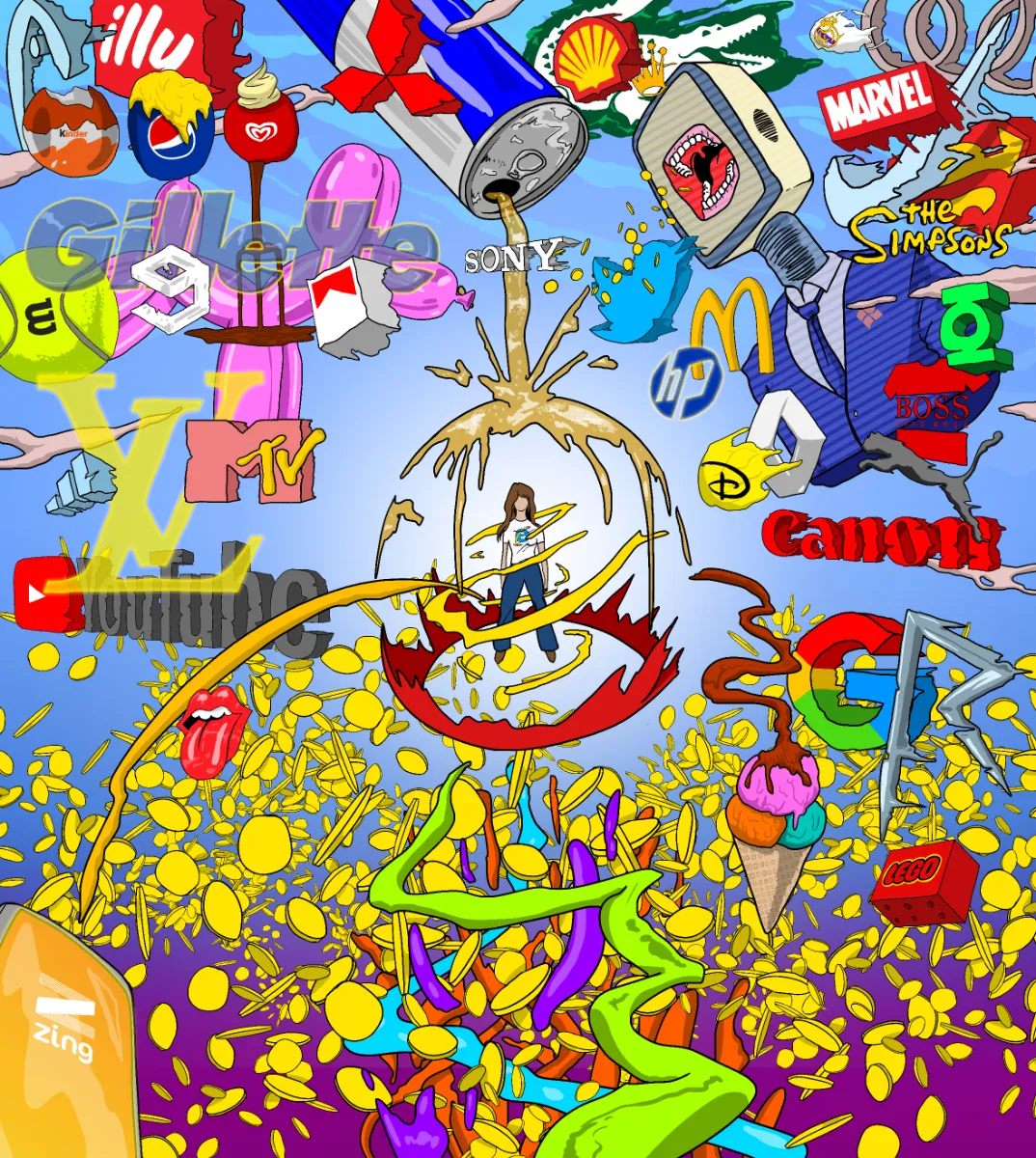
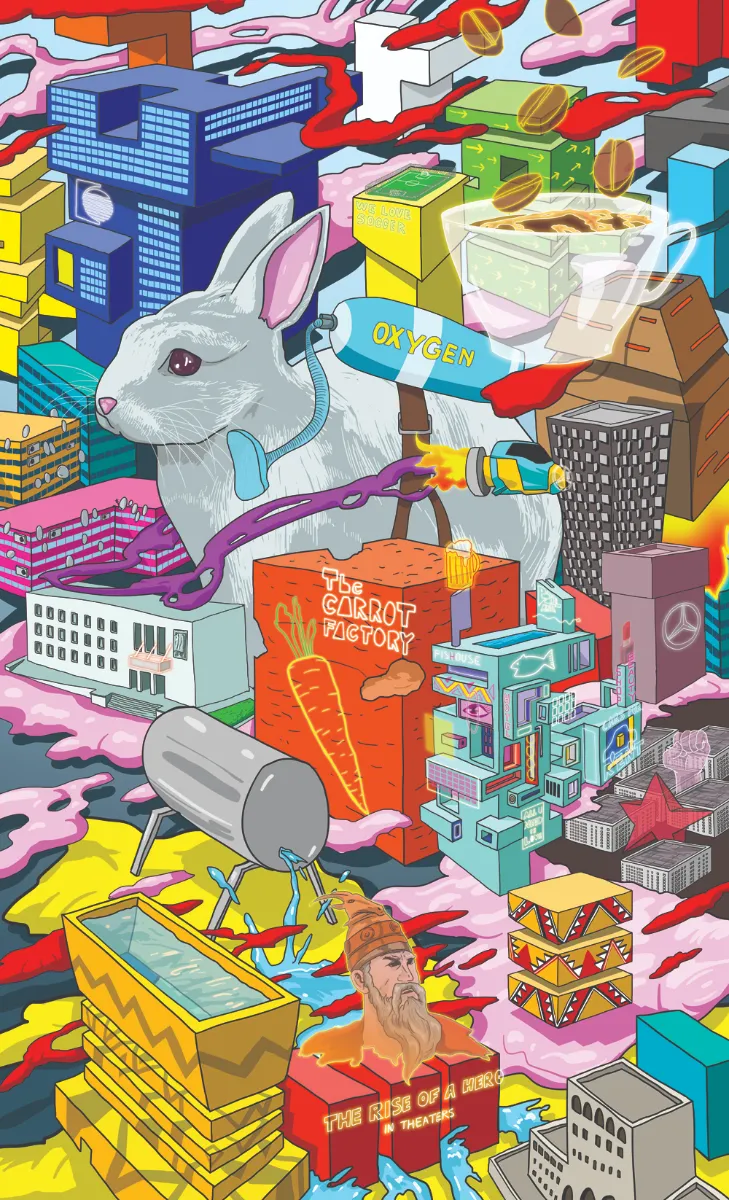


My education, therefore, was never simply a progression from painting to design and back to painting again. It was an expanding conversation between instinct and reason, abundance and restraint, fantasy and function, the handmade gesture and the controlled system.
From that conversation emerged the visual language that continues to define my work today: communication that builds worlds and tells stories, that speaks through symbols rather than explanation alone, and that seeks, beyond all strategy and technique, to reach the one place where powerful images have always belonged — the heart of the audience.